

ECHOSEARCH
Track Your Brand/Track Competitors/Briefings
OFFICIAL EXECUTIVE BRIEF • Loading Date...
SITUATION REPORT

AI Selling Drags Nasdaq Into Red

Status Summary: Contextual analysis of live event stream.

STRATEGIC RISK MATRIX

CORE RISK PROBABILITY
65%
SENSITIVE RISK VECTOR
Artificial Intelligence AssetsEquity Market IndicesTechnology Sector Capital
TOP NEWS SOURCES (LIVE FEEDS)
Bloomberg Television
AI Stocks Slide as TSMC Outlook Fails to Ease Bubble Fears
Dividend Talks
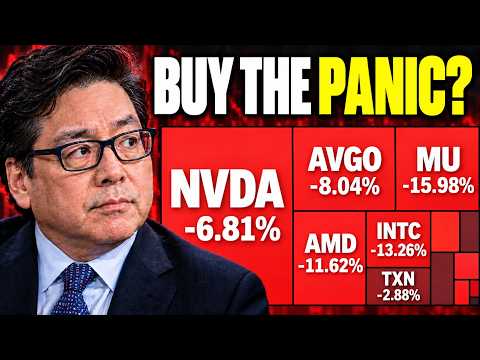
AI Stocks Are Crashing — My #1 Buy Right Now
▶
MS NOW
Why some stocks tied to A.I. TUMBLED this week in global sell-off
▶
The Hostile Takeover
AI Stock Crash! The Exact Buy, Sell, Hold Prices For These 12 Stocks
▶
OVERALL SENTIMENT
Bearish / Volatile
GENERAL RISK PROFILE
Medium
PRIMARY EMOTIONAL TONE
Analytical

Executive Summary

Equity market dynamics exhibited a significant intraday shift as early positive momentum across all three primary indexes yielded to aggressive selling within artificial intelligence-related equities. Initially, all three major equity indexes traded in positive territory, signaling baseline market stability. However, the emerging dominance of a pronounced risk-off mood specifically focused on the AI trade overwhelmed early session momentum, eventually reversing gains for key indices. As the session progressed, the downward pressure generated by liquidations in AI-focused equities proved strong enough to pull both the tech-heavy Nasdaq Composite and the broader benchmark S&P 500 into negative territory. This index movement demonstrates the concentrated systemic weight that AI assets hold over broader financial markets, where localized profit-taking or risk mitigation in a single core narrative can disproportionately drag down multi-sector index benchmarks. In contrast to the Nasdaq Composite and the S&P 500, the Dow Jones Industrial Average managed to retain positive ground throughout the selling event. This notable divergence underscores an asymmetric market response, suggesting that investor capital was not fleeing the market entirely, but was instead executing an intraday sector rotation away from high-beta technology assets toward traditional blue-chip equities present in non-tech heavy benchmarks. Intelligence leads and institutional risk officers must recognize that ongoing volatility in the AI trade represents an ongoing structural vulnerability for capitalization-weighted indexes. The reality that selling in one concentrated segment can overpower broader market gains highlights the necessity of tracking factor-specific risk exposures and monitoring index concentration vulnerabilities during sustained periods of sentiment adjustment.
Cross-Network Intelligence

Related News and Insights